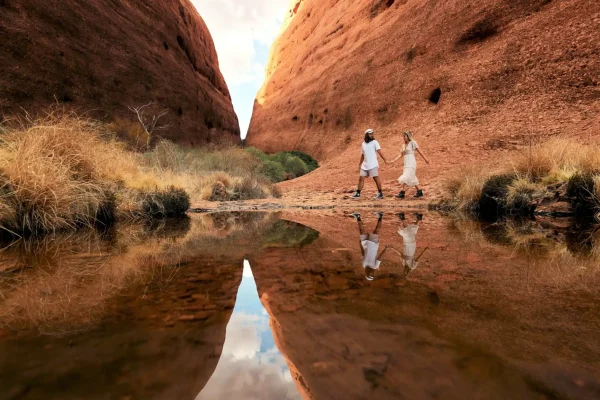
Rising 348 meters out of the surrounding red desert plain, reaching 863 meters above sea level with a 9.4-kilometre circumference sits one of the most iconic natural landmarks in Australia. Uluru, or Ayers Rock as it was known by European settlers, is more than just an impressive natural formation. The Anangu (pronounced arn-ung-oo) are the traditional indigenous owners of Uluru, which means great pebble, and the surrounding Kata Tjuta National Park. To the traditional owners of the land, Uluru is incredibly sacred and spiritual, a living and breathing landscape in which their culture has always existed.
According to Australian indigenous cultural beliefs, Uluru was created at the very beginning of time. That time is known as the Dreamtime, the period in which the natural environment was shaped and animal and human life forms were created. In the Dreamtime, ancestral spirits came out of the earth and down from the sky to walk over the barren land, bringing about landscapes and creating life. Significant landscapes were formed by the ancestral spirits that hold deep spiritual connections and are deemed sacred. Uluru is one of those holy landscapes. The gigantic fissures that slice through the deep red sandstone are linked to ancestors, and the caves that line the base of Uluru have great spiritual significance and are still used to perform sacred rituals. Indigenous Australians have lived, hunted and cultivated the holy land since the Dreamtime. Cultural and spiritual connections are still vital to Anangu’s life today.
The recent history of this beloved Australian icon has been one of controversy. First declared an Australian National Park in 1950, the impressive red monolith and surrounds were officially named Ayers Rock-Mount Olga National Park. Word spread about the natural wonder, and tourism to the area started booming. The land was no longer an indigenous reserve; the Anangu were actively discouraged from visiting the area, and as a result, their culture and rituals were largely ignored. Years of campaigning and lobbying the Government for rights to their land ensued, and finally, in 1985, Anangu were legally recognised as the land’s traditional owners. The Australian Government returned the title deeds to the park to their rightful owners. The park was then leased back to the Government on a 99-year lease. In 1987, UNESCO added Uluru-Kata Tjuta National Park to the World Heritage List two years later. It was not until 1995 that, out of respect to the traditional owners, the park name was officially changed from Ayers Rock-Mount Olga National Park to Uluru-Kata Tjuta National Park.
In the early 1990, signs were erected at the base of Uluru on behalf of the Anangu requesting that visitors “Please Don’t Climb”. Although not enforced at the time, the request was out of respect for their sacred living monument and to protect traditional law and holy information. The number of visitors climbing dropped but never completely stopped. It was not until 26 October 2019 that climbing Uluru was officially banned. While visitors are no longer permitted to climb Uluru, tour visitors can still experience the natural wonder through the numerous hiking tracks around the base of Uluru and through the stunning, unique landscape of the surrounding national park. Anangu welcomes visitors to their sacred land to learn about their ancient history, fascinating culture and spiritual connections to the land that are still alive and strong. Immerse yourself in the extraordinary indigenous history and experience a culture like no other with a visit to Uluru-Kata Tjuta National Park.