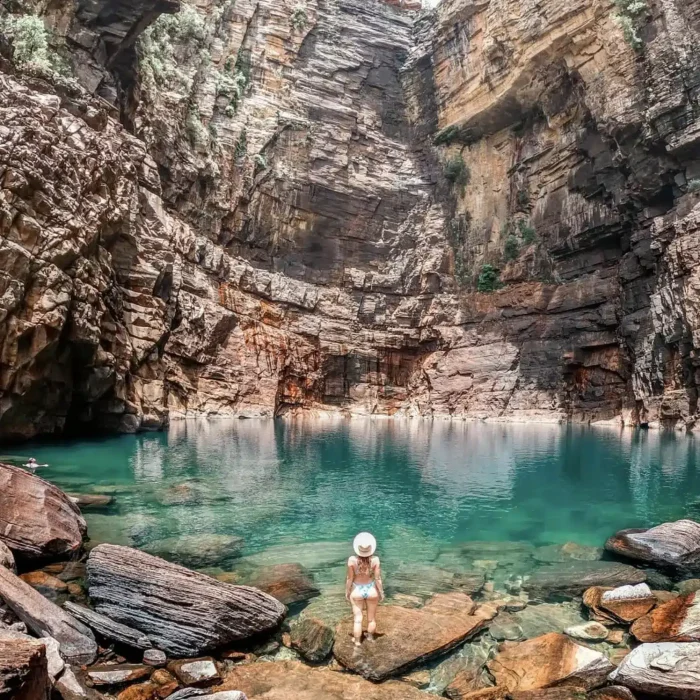
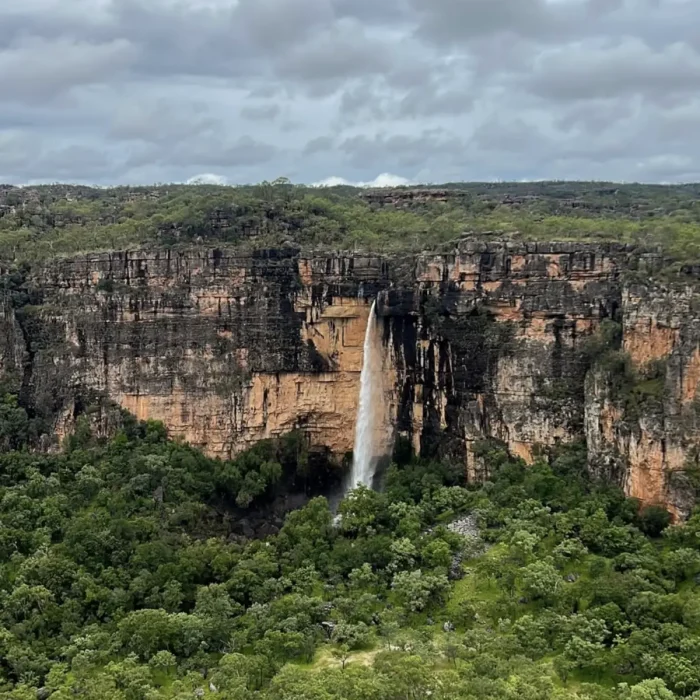
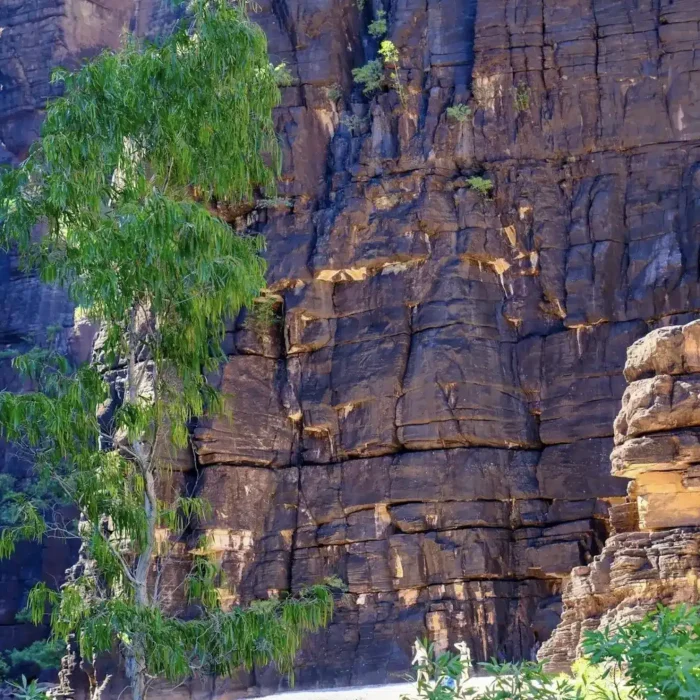
Jim Jim is one of the most impressive waterfalls in Australia and a key icon of Kakadu National Park. Towering cliffs, a massive plunge pool and a landscape carved by centuries of water flow make this remote destination a must-see for anyone looking to get off the beaten track in the Top End’s wilderness. The site is dynamic between seasons: a thunderous waterfall in the wet season and a natural swimming hole in the dry season. Whether you’re walking the Falls Gorge Walk, photographing the 150m high cliffs or learning about Aboriginal culture through stories, a trip to Jim Jim is a journey into the heart of Australia.
Stories Through Time
The area around Jim Jim has been shaped not just by water but by people and stories. The Gundjeihmi speaking Aboriginal people—custodians of this land for tens of thousands of years—have a deep connection to this country. The monsoon forest, ancient gorge and rock shelters are full of stories passed down through generations.
Nearby rock art sites tell the story of the creation journey and the natural beauty of the land. These paintings depict spiritual ancestors and events linked to water, land formation and the water pandanus that grows along Jim Jim Creek and inspired the name of the falls. For history buffs, visiting Jim Jim is a rare opportunity to hear the stories of the land before time, told through nature and ancient images on stone.
The Origin of the Name
The name “Jim Jim” comes from the local Aboriginal word “andjimdjim” which means the native water pandanus that grows along Jim Jim Creek and in the surrounding monsoon forest. These pandanus plants thrive in wetland and creekline areas and are an important part of the ecosystem. Early European explorers modified the word into “Jim Jim” and the name stuck. It’s a reminder that even common names have deep cultural roots tied to the flora and nature of Kakadu.
A Must See
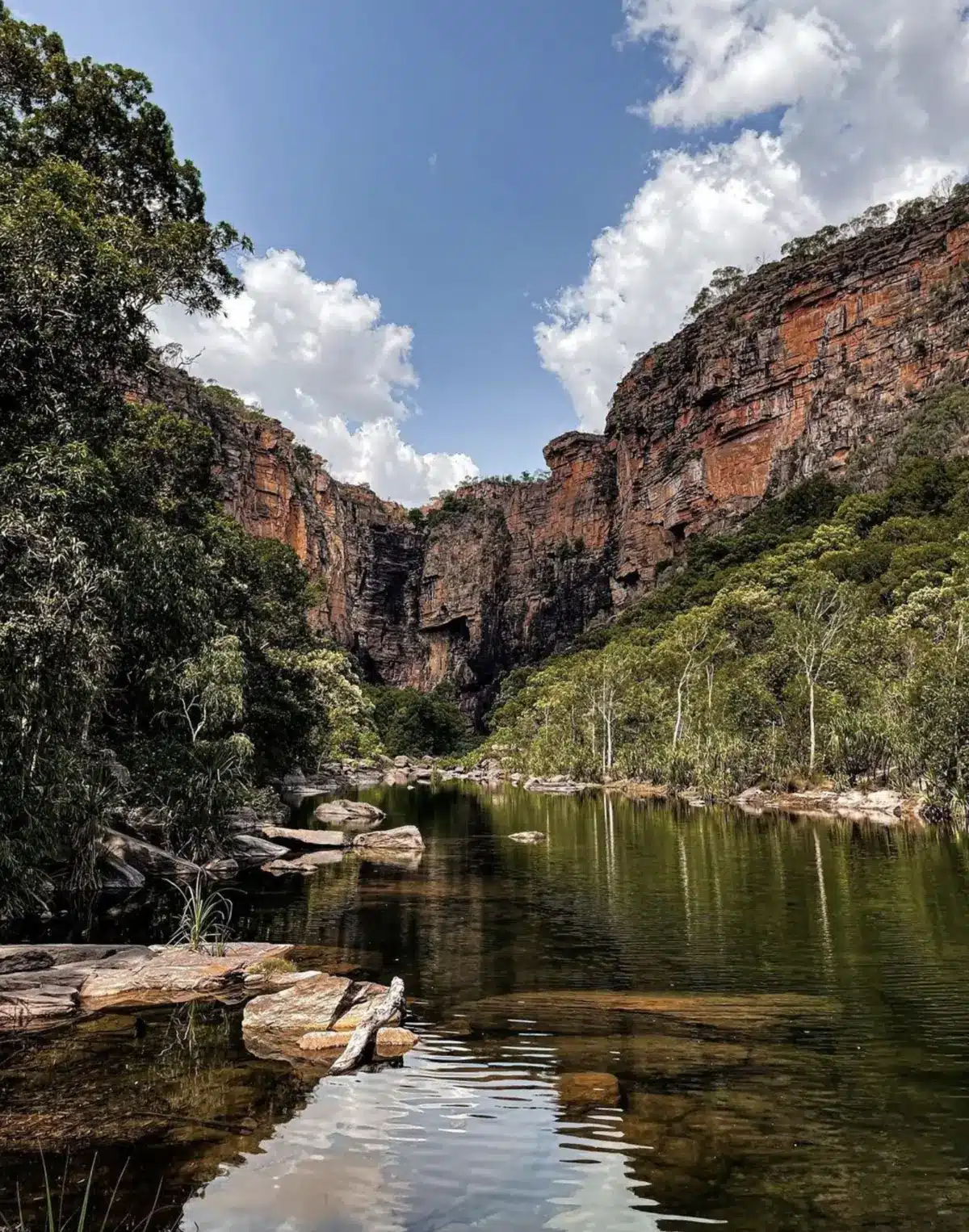
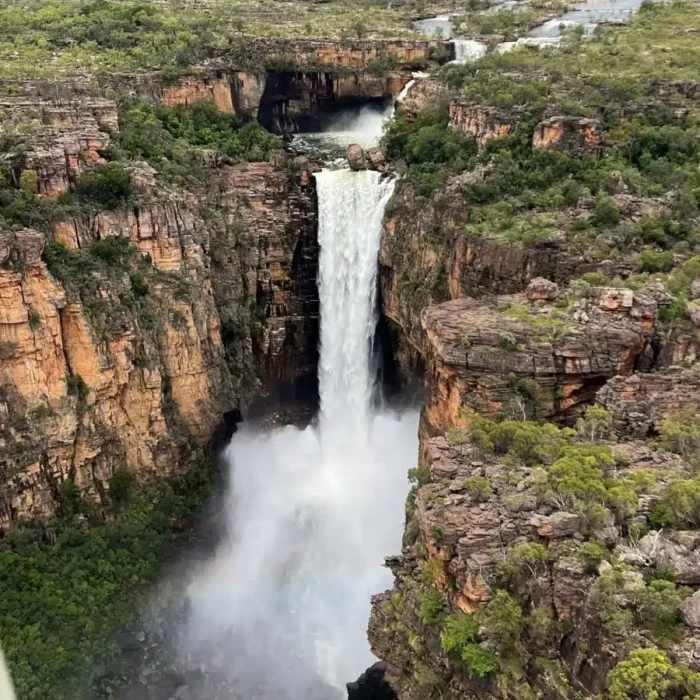
One of Australia’s biggest waterfalls, Jim Jim is a big and atmospheric location. The massive waterfall drops into a natural pool surrounded by rock formations and cliffs. In the dry season the falls slow to a trickle and you can access the marked track to the plunge pool, perfect for a swim in one of Australia’s most beautiful landscapes. In the wet season the water is abundant and the falls become a roaring curtain, best seen by air with Kakadu Air or other scenic flight operators.

- 3 DAY / 2 NIGHT
- 06:30-18:30
- 995 AUD
Directions & Access Tips
Jim Jim Falls is 43km from the Kakadu Highway (Kakadu Hwy) via a corrugated gravel road that is 4wd only. Here’s what you need to know:
- From Jabiru Township: Head south on the Kakadu Hwy and turn off near Cooinda Lodge. Follow the signs to Jim Jim Falls.
- Vehicle requirements: High clearance 4wd only due to creek crossings, narrow winding track and corrugated road.
- Walk to the falls: 2km return over huge boulders and uneven surfaces. Good hiking boots are essential.
- Road report: Check at the Bowali Visitor Centre or via Parks Australia before you go.
Best Time to Visit the Falls
Dry Season (May to October)
- Hiking and swimming.
- Water levels lower but safe to access the plunge pool.
- See ancient rock formations up close.
- Recommended for a Gorge Camping Tour.
Wet Season (November to April)
- Scenic flights to see the water flow from above.
- Roads are closed due to flooding.
- See the waterfalls in all their glory.
Peak season is June to August for most reliable access and best views.
Top Camps
Several camps nearby:
- Garnamarr Campground (sometimes spelled Karnamarr Campground): Closest to Jim Jim Falls. Seasonal. Basic facilities. Book in advance.
- Cooinda Lodge: Great base near Yellow Water Billabong. Organised trips and expert-guided activities.
- Mardugal Campground: Central location, good for both Jim Jim and Twin Falls.
Camping at Jim Jim is to be in the land before time—an amazing gorge landscape that’s millions of years old.
Safety Tips
- 4wd only beyond the Kakadu Hwy junction.
- Bring plenty of water—3 litres per person minimum for the walk.
- Hiking boots are necessary as the track is rough and has boulders.
- Swimming only in the dry season and in designated areas. Crocodile safety warnings must be followed.
- Check track conditions and road reports at the Bowali Visitor Centre or your accommodation before you head out.
- Attraction with guides recommended if you’re not familiar with the terrain.