Uluru Ayers Rock Geology

Uluru - Geology

The World's Largest Monolith?

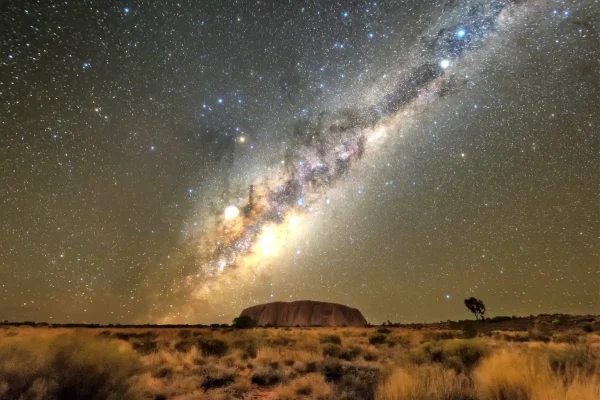
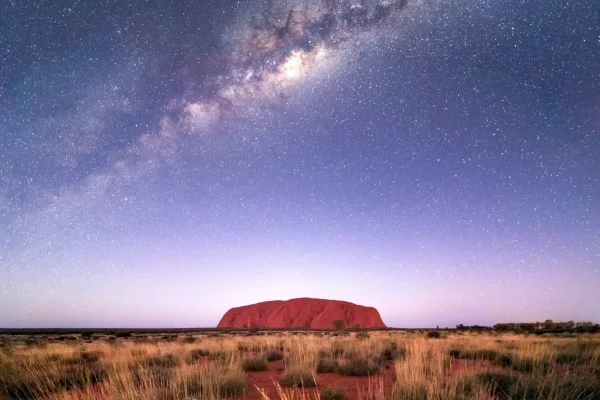
It's quite amazing that there could be such differing views on the geology of the world's most famous rock, Uluru (Ayers Rock). For years it has been known as "the world’s largest monolith" and still is in some quarters. It certainly adds to the drama of such an awe inspiring icon with a grand description.

First up, if Uluru was a monolith then it certainly isn’t the largest on the planet. That distinction goes to another Australian, Mount Augustus in Western Australia which is approximately 2.5 times larger in mass and rises to 858 meters above the surrounding land. So there goes the largest monolith theory.

Secondly, there is considerable weight behind the theory that Uluru is not actually a monolith, i.e. a single rock, but is actually part of a huge predominantly underground rock formation that also includes Kata Tjuta (the Olgas) 35km to the west and Atila (Mount Connor), a mesa tableland, approximately 100km to the east of Uluru.

The truncated theory goes that more than 600 million years ago large parts of Central Australia were below sea level in what is called the Amadeus Basin. Rivers from nearby mountains dumped large quantities of sedimentary rocks into the Amadeus Basin which then started to rise out of the sea about 500 million years ago. With little or no vegetation to protect the mountains from erosion, great rivers would have formed carrying tonnes of sediment which would quickly build to form alluvial fans. Layer upon layer would have built up and which would eventually form Uluru from a section of one of the alluvial fans. The sea eventually invaded the area again depositing more sand and mud burying the alluvial fans. Over this whole protracted period the profound pressures and squeezing together transformed the deposited sand, gravel and mud, etc into solid rock.

Between 400 – 300 million years ago the area was subjected to another bout of mountain building and landmasses colliding causing more uplift, folding and faulting, breaking up the alluvial fan and the various layers above and below. The future Uluru was a part of one of these alluvial fan sections which has been tilted on its side at almost 90° so all the sedimentary layers are on their side.

After millions and millions of years of continued weathering, Uluru, Kata Tjuta and Atila survived the erosion as they were made of harder rock than that which surrounded them. More recently, about 70 - 60 million years ago, the climate was much wetter which then washed sand and other elements back into the low lying land which smoothed out the landscape leaving only Uluru, Kata Tjuta and Atila protruding out of the desert.

So, quite possibly Uluru, Kata Tjuta and Atila are all part of one giant mostly underground rock formation, stretching some 130km. However, as all three rock formations have slightly different composition and we know Uluru extends further below ground than above, then to your average person Uluru is a bloody big rock, monolith or not, and truly fantastic.

Top


Alice Springs Tours


Ayers Rock Tours

Adventure Tours

Uluru Tours


Central Australia Tours
Aboriginal Tours
Outback Tours
The Aboriginal people of the Western Desert region of Central Australia suffer rates of kidney failure up to 30 times the National average. When treated in urban centres, usually followed by their extended families, the prognosis for them and their family is grim. Being uprooted from their homelands, which they are profoundly connected to, kills the spirit.
A community based dialysis service has been set up out in their homelands so patients in need of treatment can do so in the place they were born with their family there to support them.
If you would like to know more or would like to help out this wonderful initiative, click on the logo.
Design and Content by
Branding, Web Design, Corporate Communications and Copywriting